


Ragnarok Origin: Classic
3.453.00 Reviews
App Specs
- Version
- 2.0.4
- Updated On
- License
- Free
- Downloads
- 100,000+
- Developer
- Gravity Game Vision
- Categories
- Role Playing
- Platform
- Android
Screenshots


 Analysis by AppCompare
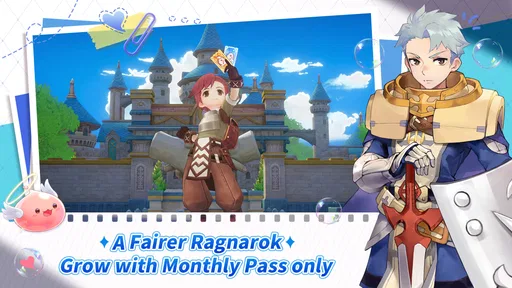
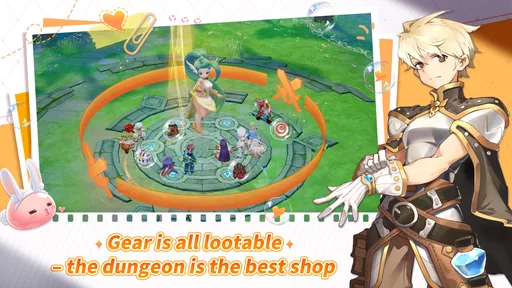
I spent time with Ragnarok Origin: Classic as a role-playing game built around the familiar Ragnarok setting, but with a noticeably more restrained approach to progression. Gravity Game Vision presents it as a free game where equipment and useful rewards are intended to come through play, while a monthly pass is the main recurring purchase idea. That promise immediately makes it interesting for players who are tired of games where spending seems to decide every important outcome.
My first impression was that this is best understood as a game for people who enjoy a long-running character journey rather than a quick, self-contained adventure. You create a character, settle into the world, improve your build, and gradually learn how its routines fit together. The appeal is not just the next battle. It is the feeling that ordinary play, careful choices, and cooperation can keep moving you forward.
The audience response is mixed but substantial. It has a 3.3 average from around 1.4 thousand ratings, with more than 100 thousand installs, so there is clearly an active level of interest without the game being universally loved. I think that balance is fair: the classic structure can be rewarding, but it also asks for patience and attention in ways that more casual mobile role-playing games often avoid.
How it fits into a shared household
A realistic use case is a shared home where one person plays after school or work and another family member uses the same device for a different purpose. In that situation, the game works best when it is treated as an individual hobby rather than a communal app. Its progress belongs to the player’s character and account context, so casually handing the phone around can create confusion even if the game itself is easy to open.
I would not recommend letting several people take turns on one character. Role-playing games depend on consistent decisions: skill development, equipment choices, inventory management, and the rhythm of daily activity all build on earlier choices. A younger player may spend resources that an older player was saving, while an experienced player may change a build without explaining why. That is not a technical flaw in the game; it is simply the natural boundary of a persistent character.
For a household, the cleanest arrangement is one player per account and a clear agreement about when the device is available. If two people want to play, they should understand that they are starting separate experiences, not sharing one evolving hero. That distinction matters more here than it would in a short puzzle game, because progress in a role-playing game accumulates over time.
The game’s free entry also makes it easy to try without an upfront purchase. However, free installation should not be confused with a completely cost-free household activity. The game includes optional purchases ranging from $0.99 to $99.99 per item. I would discuss that openly before allowing a child to play, especially on a device connected to a payment method. The monthly-pass structure may feel more predictable than aggressive competitive spending, but any purchase system still deserves a boundary.
Worth Reading Before You Choose

EA SPORTS FC Mobile 26 Is a Bigger Football Game, but It Takes Time

Flipboard Shows What News Apps Must Do Beyond the Feed

Switching to Android Auto Means Rethinking Your Driving Routine

Google Calendar Makes a Crowded Week Easier to Manage

Ludo King Makes the Most of the Minutes Between Plans

Baby Panda World Brings Quick Play to Modern Phones, but Its Game Library Feels Busy
Setting practical boundaries before the first session
Before I began seriously investing time, I decided what kind of player I wanted to be. That is useful advice for anyone sharing a device. If your goal is to explore the world and improve gradually, you can approach purchases very differently from someone who wants to optimize immediately. Making that decision early prevents the shop from quietly becoming the center of the experience.
I also found it helpful to separate “playing” from “maintaining” the character. A short session may involve checking progress, sorting equipment, or preparing for the next activity rather than completing a major quest. In a shared household, those maintenance moments are easy to interrupt, so I would avoid starting them when another person needs the phone immediately. Losing track of what you were comparing or planning can lead to careless choices.
Another useful boundary is to avoid making build changes while distracted. A role-playing character is not just a collection of interchangeable items. Decisions about abilities and equipment can affect how comfortable the game feels later. I prefer to make those changes when I have enough time to test the result, rather than tapping through menus during a rushed break.
The current version is 2.0.4, and the game requires Android 8.0 or later. Those details are worth checking before planning a shared-device setup, particularly if the household phone is older. A game can be appealing in theory and still be a poor fit if the only available device cannot run it properly or if its owner needs the phone for more important tasks.
Why coordination matters more than it first appears
Ragnarok Origin: Classic becomes more enjoyable when players coordinate instead of treating every session as a solitary grind. Even without turning the game into a formal group commitment, talking through goals can make the experience smoother. One person might focus on learning a class, while another prefers collecting resources or exploring. Sharing observations helps prevent everyone from repeating the same trial and error.
In a family setting, I would keep coordination simple. Agree on who is playing, what the immediate goal is, and whether the session is meant to be relaxed or focused. That small conversation can prevent arguments over the device and also helps a younger player understand why an experienced player is taking time with menus instead of rushing into the next fight.
The monthly-pass positioning also changes how I think about cooperation. If a household is trying to avoid a spending race, a shared rule such as “we play first and decide later whether the pass is worthwhile” is more sensible than buying immediately. The game’s central appeal is that play should matter, so I would test whether normal progress feels satisfying before paying for convenience or extra access.
One non-obvious benefit of this approach is that it gives players a way to compare progress without comparing spending. Two people can discuss which activities helped their characters, which equipment choices felt useful, and which mistakes cost time. That creates a healthier conversation than simply asking who has the stronger character.
There is also a trade-off. Coordination takes time, and not every player wants a game that requires discussion. If I want a quick five-minute distraction with no consequences for stopping halfway through, I would choose a simpler casual game instead. This title is better when I can remember what I was doing and return with a plan.
Age, trust, and the meaning of the age label
The content rating is Everyone 10+, which places the game in a broad family-friendly range rather than presenting it as an adults-only experience. I would still treat that rating as a starting point, not a complete household decision. The important questions are whether the child understands persistent progress, whether they can handle optional purchases responsibly, and whether they know not to share account details casually.
Trust matters because role-playing games reward repeated attention. A child who is allowed to play independently should understand that the character’s inventory and choices are not a toy box for random experimentation if another person also relies on that character. Conversely, an adult sharing a device should avoid treating a child’s progress as something they can redesign without permission.
I would also explain that “free” does not mean “without decisions.” The purchase range can be significant at its upper end, so a household should decide in advance whether purchases are allowed, whether a monthly pass is considered separately, and who has permission to approve anything. That conversation is more useful than relying on vague warnings after an accidental purchase.
The game’s progression philosophy may be a good teaching opportunity for older children and teenagers. It encourages a discussion about patience, trade-offs, and the difference between earning something through play and buying a shortcut. I would not present the game as a lesson, but its design direction makes those conversations natural.
At the same time, I would skip it for a younger child who struggles to stop once a session begins or who cannot reliably distinguish game currency from real money. I would also skip it for a household where several people want equal access to one character. The game’s persistent nature makes those arrangements more fragile than they may seem at first.
What the progression feels like in everyday use
My favorite way to approach the game is with a modest, specific goal. Instead of opening it and expecting a dramatic achievement every time, I might decide to improve one part of a build, understand an unfamiliar activity, or organize equipment before the next session. That mindset makes the slower rhythm feel intentional rather than tedious.
The classic role-playing structure rewards players who enjoy learning systems. You are not only reacting to enemies; you are deciding how to develop a character and how to use the tools the game gives you. The claim that useful things can drop through play is important here, because it gives ordinary sessions a reason to matter beyond filling time.
Still, the same structure can create friction. Inventory and character decisions require attention, and a player who prefers automatic progression may find the process too involved. I also think the promise of reduced pay-to-win pressure can raise expectations. If you arrive expecting every part of the game to feel effortless because spending is less dominant, you may be disappointed. A fairer progression model does not remove repetition, planning, or the need to learn.
Compared with many modern mobile role-playing alternatives, this feels less like a short daily checklist and more like a continuing hobby. That is its strength for players who want attachment to a character. The downside is that it may be less satisfying for someone who wants polished, self-contained battles with rapid rewards and very little management.
Compared with a traditional desktop or console role-playing game, the mobile format is more convenient for fitting in short visits, but it does not necessarily provide the same sense of a single authored journey. The experience is more about ongoing character development and repeated engagement. I would choose it over a premium story game when I want a persistent world to return to, but I would choose the premium story game when I want a clear ending and no purchase decisions after buying it.
Small habits that make the experience better
My first practical tip is to keep a simple personal note about the character’s current direction. It does not need to be elaborate. Writing down the intended role, the next upgrade target, and any item you are saving can stop impulsive changes, especially when several household members use the same phone.
Second, I would review rewards before spending them. When a game emphasizes drops and play-based progress, it is tempting to use every new item immediately. Waiting until you understand whether the item supports your current build can prevent the common mistake of improving something that you later abandon.
Third, I recommend treating the monthly pass as a separate decision from the game itself. Play long enough to learn whether the routine fits your schedule. If you only enjoy the idea of the game but rarely return, the pass will not fix that. If you consistently enjoy the progression and want the specific convenience it offers, then the decision is easier to evaluate honestly.
Fourth, use shared-device sessions for planning and solo sessions for focused progress. A family member can watch, ask questions, or discuss choices during a relaxed session, while the character owner handles important changes privately. This arrangement preserves the social side without turning every menu decision into a group negotiation.
Finally, do not measure the game only by how quickly the character becomes powerful. The more meaningful test is whether the activities feel worthwhile when progress is gradual. If the answer is no, the game may not be right for you even if its monetization philosophy sounds attractive.
Who should play, and who should look elsewhere
I would recommend this game to fans of classic online role-playing design, especially those who like building a character over time and prefer the idea that regular play can produce valuable rewards. It is also a reasonable choice for an older teenager or adult who wants a free entry point and is willing to set clear spending limits.
I would be more cautious for someone who has never enjoyed inventory management, character planning, or repeated progression. The familiar setting may attract curiosity, but nostalgia alone will not make the routine enjoyable. Players who want immediate action with no long-term commitment should look toward a straightforward action game instead.
I would also avoid recommending it as a shared family game in the same way I would recommend a party title. It can be discussed and enjoyed alongside other people, but the account and character boundaries make it better suited to individual ownership. A household can support the hobby without pretending that one hero belongs equally to everyone.
Players concerned about competitive spending may appreciate the game’s stated direction, but they should still approach the purchase system thoughtfully. The absence of a spending race as the main appeal does not remove the need for personal limits. In my view, the strongest version of this experience is one where purchases remain optional to the player’s enjoyment rather than becoming the reason to continue.
My household verdict
After weighing the convenience, the persistent progression, and the boundaries needed around accounts and purchases, I see Ragnarok Origin: Classic as a specialized recommendation rather than a universal one. It suits a player who wants an ongoing role-playing hobby, enjoys learning a character’s options, and is comfortable with progress that unfolds gradually.
For shared homes, I would approve it with clear expectations: one person should own each character, payment rules should be agreed on beforehand, and important build decisions should not be made casually by whoever happens to hold the phone. Those simple rules protect both the game and the relationships around it.
The game’s free price makes trying it straightforward, and Gravity Game Vision has chosen a progression message that will appeal to players frustrated by stronger pay-to-win pressure. Yet the 3.3 average also reflects why some people may not stay: a classic, ongoing role-playing structure demands more patience than many mobile games. I found that trade-off honest and understandable.
My final recommendation is to install it if you want a persistent character journey and are willing to judge it by the quality of regular play, not just by its promise of fairer progression. Give it a focused trial, set your household limits before purchases enter the picture, and keep account ownership clear. If you want a quick, consequence-free game or a shared family title with no personal boundaries, choose something simpler. If you want a mobile RPG that asks you to invest attention as well as time, this one is worth exploring.
Pros
- Faithful classic Ragnarok atmosphere with familiar classes
- maps
- and monsters.
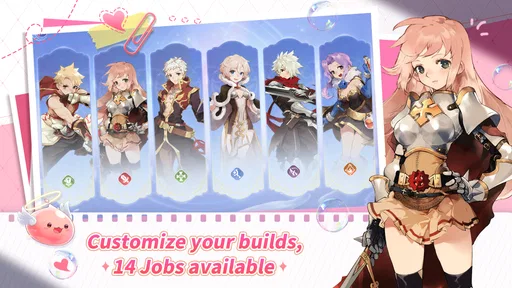
- Large selection of character builds encourages experimentation and replayability.
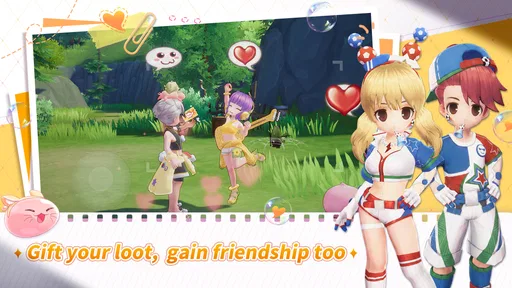
- Social features make parties
- guilds
- and cooperative dungeon runs enjoyable.
- Regular events provide extra activities and rewards beyond the main storyline.
- Runs smoothly on many modern Android and iOS devices with adjustable settings.
Cons
- Progress can become heavily dependent on grinding and repeated daily tasks.
- Some upgrades and conveniences may encourage spending through in-app purchases.
- The interface can feel crowded
- especially on smaller phone screens.
- Combat may seem slow or repetitive for players who prefer fully active gameplay.
- Server populations and matchmaking quality can vary by region and time of day.
FAQs for Ragnarok Origin: Classic
What is Ragnarok Origin: Classic?
Ragnarok Origin: Classic is a mobile MMORPG inspired by the original Ragnarok Online experience. It combines familiar classes, monsters, maps, quests, equipment, and social features with controls designed for Android and iOS devices. The game focuses on character progression, exploration, party play, guild activities, and real-time combat, while preserving the colorful anime-style presentation associated with the Ragnarok series.
Is Ragnarok Origin: Classic free to download and play?
Ragnarok Origin: Classic is generally available as a free download, allowing players to begin the adventure without purchasing the game upfront. However, it may include optional in-app purchases for items, currencies, cosmetics, progression assistance, or other conveniences. Players should also expect an internet connection, device storage requirements, and possible differences in available content depending on their region and platform.
Does the game require an internet connection?
Yes, Ragnarok Origin: Classic is designed as an online multiplayer game and requires a stable internet connection for most, if not all, of its features. Character data, combat, quests, events, guild systems, and matchmaking are handled through online servers. Playing over Wi-Fi is recommended when possible, especially during long sessions, updates, or areas with many players and visual effects.
What classes and gameplay options are available?
The game offers the class-based progression that players commonly expect from Ragnarok titles, with different roles suited to damage dealing, defense, support, ranged attacks, or magic. Your choice affects equipment, skills, and preferred combat style. Beyond solo quests, you can usually participate in parties, guild activities, dungeons, competitive modes, life or social systems, and character development features.
Is Ragnarok Origin: Classic suitable for new players and fans of the original game?
It can appeal to both newcomers and longtime Ragnarok fans, although the experience may feel different depending on what you expect. New players receive a colorful MMORPG with guided quests, automated assistance, and many progression systems, while veterans may appreciate familiar classes, locations, monsters, and nostalgic presentation. Before downloading, remember that mobile conveniences, monetization, and updated mechanics may not exactly match the classic PC version.


